
Subscribe, Connect, Learn, Grow:Our Monthly Newsletter Delivers Care Industry Innovation, Critical News, and Insights
As an NDIS provider, it’s up to you to ensure your business remains compliant with the latest NDIS rules and regulations. But with compliance requirements constantly changing, it can be challenging to stay up to date, especially while you’re trying to deliver quality NDIS supports to your clients.
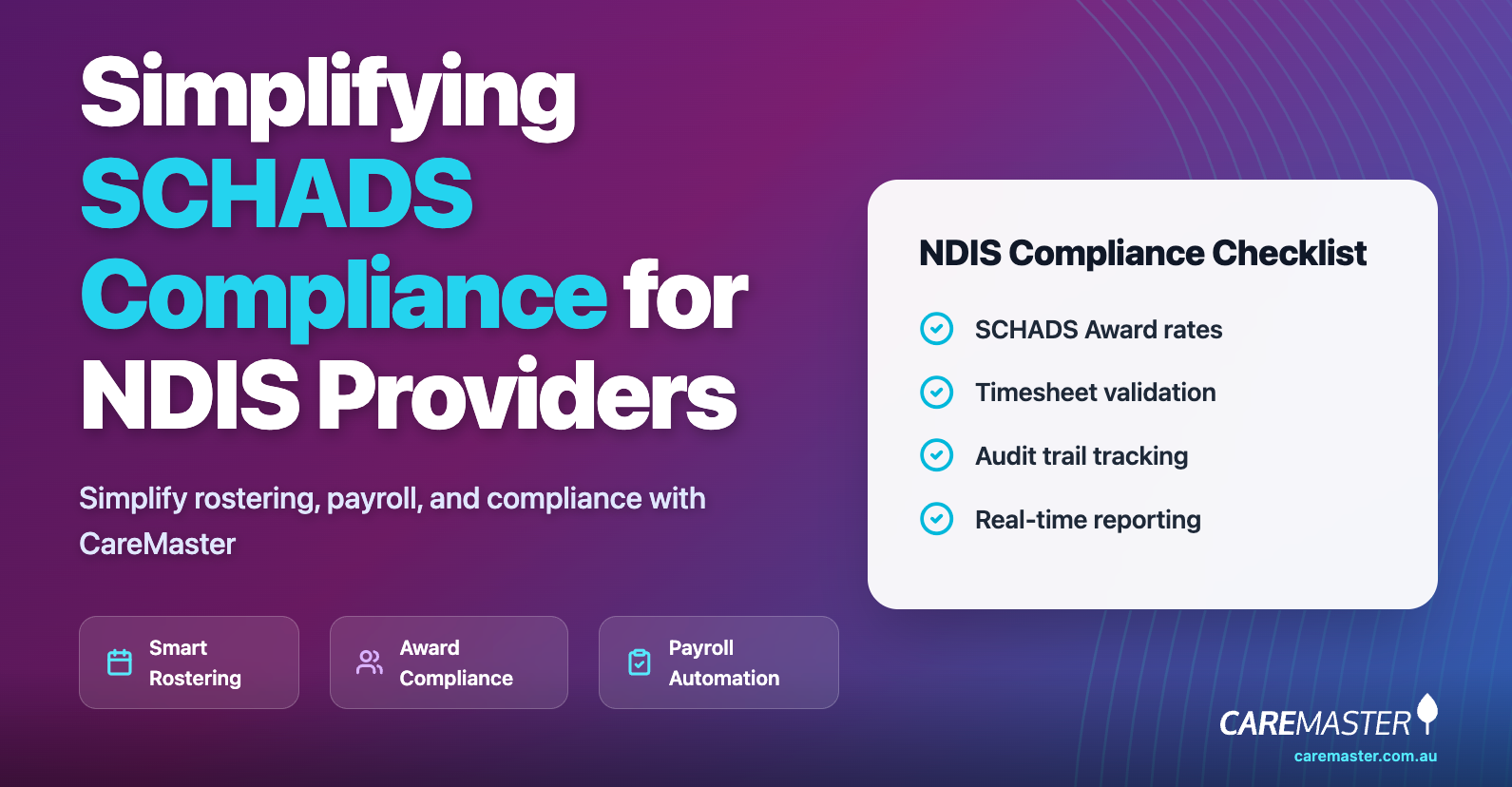
With this in mind, we’ve created an NDIS compliance checklist to help you maintain your provider compliance obligations.
Under section 73F of the NDIS Act, registered NDIS providers must meet the compliance requirements set out under their conditions of registration. This includes complying with:
Let’s look at each compliance area in a little more detail or download our up-to-date NDIS Compliance Checklist.
NDIS Practice Standards
The NDIS Practice Standards set out the quality and safety benchmarks that NDIS providers must meet to ensure they deliver high-quality, participant-focused services. These standards cover key aspects of service delivery and operational management, ensuring consistency, safety, and dignity for participants.
The Core Module of the Practice Standards comprises 24 standards grouped into four key areas:
By adhering to these standards, NDIS providers ensure they meet the compliance requirements set by the NDIS Commission, creating a framework for delivering high-quality services that protect and empower participants.
NDIS Code of Conduct
The NDIS Code of Conduct outlines the ethical and professional standards required for all NDIS providers and their workers. It’s designed to ensure the safety, dignity, and well-being of NDIS participants. Providers must adhere to these principles to remain compliant with the NDIS framework.
As part of their obligations, providers must also support their workers to understand and apply the NDIS Code of Conduct throughout the course of their daily tasks.
Complaints management and resolution
Providers must establish a clear, transparent process for managing and resolving complaints to comply with NDIS regulations and uphold participants’ rights. This involves ensuring participants are aware of their rights and understand how to make a complaint.
Incident management and reportable incidents
In addition to implementing a complaints management system, NDIS providers must also develop their own incident management system to document and address any reportable incidents. Providers are required to report serious incidents, including allegations, to the NDIS commission, that relate to:
You can read more on NDIS incident reporting here.
Worker screening
The NDIS worker screening process is a critical aspect of provider compliance. It ensures only suitable individuals work with NDIS participants, particularly those in vulnerable situations. It involves a mandatory background check for workers engaged in risk-assessed roles within NDIS service delivery.
The worker screening process checks for criminal history, past conduct, and other relevant records, including workplace misconduct and disciplinary actions, to assess whether a worker poses any risk to NDIS participants.
While registered NDIS providers must screen all workers before signing them onto their books, they are also required to provide ongoing training to ensure their staff understand their obligations under the NDIS. Not to mention, providers also need to have systems in place to ensure ongoing compliance, including maintaining up-to-date records of worker screenings and regularly checking the status of clearances.
Key personnel suitability
Key personnel refers to individuals in key executive, management or operational positions within NDIS provider organisations, like Managers, Chief Executive Officer, Company Directors, Board Members, or Chairperson.
As part of the application for registration process, NDIS providers must disclose all key personnel. This information is used as part of the NDIS Commission’s suitability assessment. Ultimately, the assessment considers whether these personnel have been involved past convictions, enforcement actions, insolvancies, fraud, or any other events that might make them unsuitable for future NDIS ventures.
Notifying changes or events
As an NDIS provider, you must inform the NDIS Commission of any changes or events that impact your ability to provide services to NDIS participants. This includes events like worker shortages or changes in the legal entity or business structure.
Download our NDIS compliance checklist to help you maintain your provider compliance obligations.
NDIS providers typically undergo audits every three years as part of the NDIS registration and compliance process. That said, the frequency and scope of these audits can vary based on the provider’s registration status, services, and risk profile. NDIS providers will also undergo an audit during the application for registration or renewal process.
As part of the audit process, auditors consider whether the provider has maintained compliance with with NDIS Practice Standards and meets the NDIS Code of Conduct. With this in mind, it’s essential that providers clear, accessible records and documentation relating to service agreements, risk assessments, and incident reports. It can also help to have a compliance checklist on hand to make sure you’re meeting your obligations as an NDIS provider.
Audits are designed to be collaborative, giving providers an opportunity to improve their practices. After the audit, providers will receive a report that outlines any areas of non-compliance, and they will need to implement corrective actions within a specified timeframe to maintain their registration.
Ensuring NDIS compliance can be incredibly time consuming, not to mention overwhelming. But with the help of specialty NDIS software, like CareMaster, you can streamline you service and stay up to date with the latest regulations.
At CareMaster, our comprehensive platform ensures NDIS compliance by incorporating the NDIA standards throughout our system. From providing incident management tools to offering support for your workers, our platform also allows you to comply with your six key obligations, including:
Get in touch to learn more about how CareMaster can help you maintain NDIS compliance and provide quality NDIS support.


CareMaster would like to acknowledge the Traditional Custodians of the land on which we operate, and pay our respects to their Elders past and present.