Subscribe, Connect, Learn, Grow:Our Monthly Newsletter Delivers Care Industry Innovation, Critical News, and Insights
This guide clarifies the distinctions between Provider travel and Participant transport under the NDIS, outlining specific rules for managing each type of transportation.
Provider travel, refers to situations where a Provider can claim worker time spent travelling to deliver support to a Participant, as outlined in the NDIS Provider travel information. This guide will consistently refer to provider travel as worker travel time.
Participant transport encompasses the transport supports utilised by Participants for social and community participation and may receive funding in a Participant’s NDIS plan to address associated expenses. Providers delivering community access supports can claim travel costs alongside workers’ time, for transport expenses such as public transport or per-kilometer car usage if pre-approved by the Participant.
Several factors dictate a Provider’s eligibility to claim worker travel time, such as:
Providers can claim worker travel time under specific circumstances when delivering the following supports:
Instances where worker travel time cannot be claimed encompass several scenarios, including but not limited to cases where a worker:
Providers should consider the service location when claiming worker travel time, as it directly impacts the maximum claimable duration. In metro areas designated by the Modified Monash Model (MMM1−3, encompassing sizable regional centres), Providers can claim up to 20 minutes of worker travel time for appointments. In regional areas categorised as MMM4 or 5, Providers can claim up to 45 minutes of worker travel time. However, if a Provider travels between two metro areas, they can only claim up to 20 minutes of travel time, even if the actual travel duration exceeds an hour.
Providers must distinctly claim worker travel time using the specific line item relevant to the support provided. This necessitates Providers to designate the claim type as ‘travel charges’ within either the bulk upload or individual payment request. For instance, if a Provider delivers 2 hours of personal care support and the worker has travelled 15 minutes to the appointment, the Provider submits a standard claim for 2 hours of personal care support and separately claims the 15 minutes as a travel charge.
To minimise worker travel time, Providers should explore adaptable work approaches. Considerations for improving efficiency include:
Providers have the option to reclaim transport expenses, like those related to using Provider-owned vehicles, when accompanying or transporting participants within the community. This applies when delivering community access support or transport support.
Transport funding might be included in a Participant’s plan if it’s deemed reasonable and necessary. Participants can access funding for transport when they face substantial difficulty using public transport due to their disability. However, this funding isn’t intended to cover transport assistance for informal carers or parents transporting the Participant for everyday commitments.
To understand the specifics of when transport funding is incorporated into a Participant’s plan, please consult the NDIA’s Operational Guideline: Transport.
The NDIS Travel Allowance plays a crucial role in facilitating NDIS Participants’ access to disability resources beyond their residences, enhancing their ability to achieve plan objectives more easily. This provision is especially vital in situations where the use of public transportation presents significant challenges due to a Participant’s disability.
The provision of financial assistance for obtaining transportation support ensures that individuals facing difficulties in using public transit can seamlessly access necessary mobility assistance.
Moreover, the NDIS extends its support by allocating funds to engage service Providers in assisting with transportation to activities that may or may not be directly supported under the plan. Examples of such instances include travel to and from medical appointments, physiotherapy sessions, and commuting to work.
In essence, the NDIS Travel Allowance stands as a targeted support mechanism that addresses the transportation needs of participants and contributes to the achievement of their outlined plan objectives.
There are three benchmark levels of funding available for adults receiving transport funding.
Transport assistance encompasses three distinct levels of support delineated as follows. These tiers serve to allocate a transport budget for Participants, with NDIA-funded supports subject to annual indexing for adjustments.
Level 1: The NDIS offers up to $1,606 annually for Participants not engaged in work, studies, or day programs but seeking improved community access.
Level 2: Participants engaged in part-time work or studies (up to 15 hours a week), attending day programs, or involved in social, recreational, or leisure activities can receive up to $2,472 per year.
Level 3: For those working, seeking employment, or studying at least 15 hours a week, and unable to use public transport due to their disability, the NDIS provides up to $3,456 annually.
Exceptional Circumstances: Participants may receive higher funding if they have general or funded supports in their plan specifically aimed at facilitating their employment participation.
Yes, you can access NDIS funding for transportation if you’re unable to use public transport. For instance, if you’re unable to utilise services like city buses or trains.
If you’re unable to use public transport, the NDIS offers funding for alternative transportation options, such as:
Travel Allowance Funding cannot be used:
For additional details, please visit the Participant Transport Fact Page.
NDIS-funded transport support offers Participants four management options. They can opt for NDIA management, enlist a plan manager, self-manage, or receive regular payments (typically fortnightly or monthly) into their chosen bank account.
In cases where a Participant receives transport support or utilises their funding for additional Provider transport expenses, Providers must recover costs in alignment with the Participant’s chosen funding management method. For instance, if a Participant receives transport funding as periodic payments into their bank account, Providers need to directly invoice the Participant for any extra Provider travel expenses.
Providers should ensure proper procedures when claiming transport costs via the NDIA Provider Portal by using the designated NDIS support line item (i.e., transport: 02_051_0108_1_1), refraining from claiming transport costs using different line items. Additionally, Participants have the option to cover travel expenses using personal funds from their non-NDIS income.
Participants have the flexibility to utilise Core supports across various categories, including transport, except in cases where their total transport funding is arranged as periodic payments or when no funding has been allocated for transport supports.
Flexibility in using transport funding within Core supports is only available if the Participant’s transport funds are managed by the NDIA, plan-managed, or self-managed. Participants have the option to have the NDIA manage a portion of their transport funds while receiving the rest as periodic payments. This arrangement enables access to flexible use of their Core budget, particularly for additional transport funding, if desired.
Demonstrating the management of NDIS Travel and Allowances in differing scenarios for NDIS Providers.
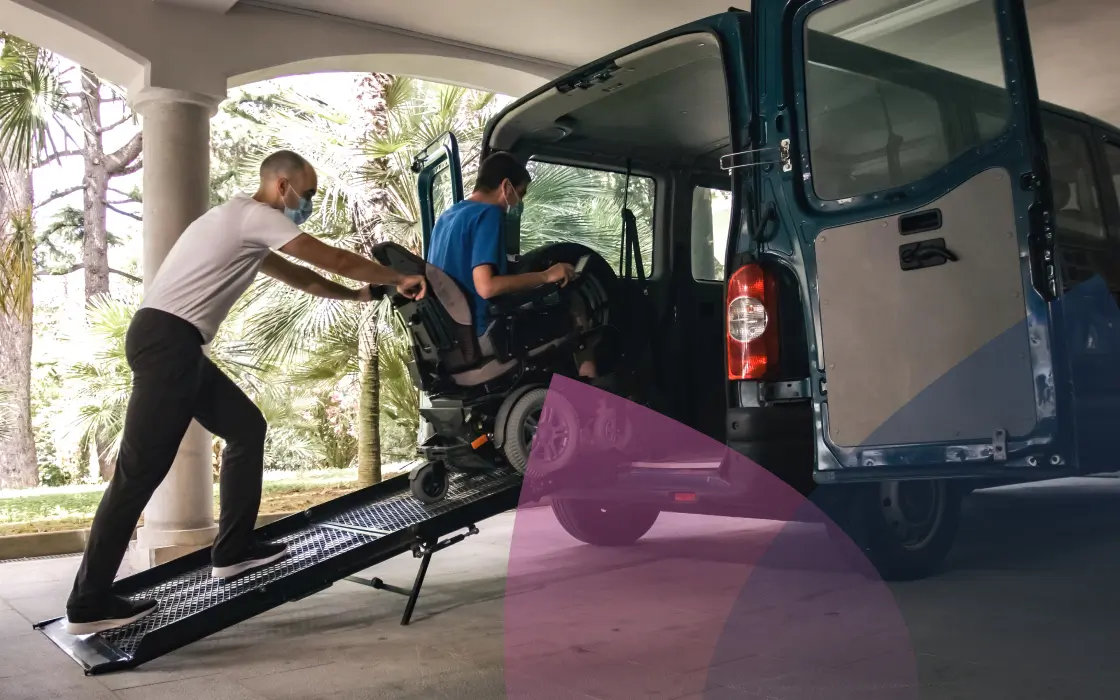
Accompanying and/or transporting Participants in the community involves the Provider being present with the Participant in the vehicle during the journey.
Providers Can Recover Travel Costs Under Specific Conditions:
When a Provider faces extra expenses beyond the worker’s time while delivering transport support.
Payment Process for NDIS Providers in This Scenario
Agreed upon through negotiation between the Participant and Provider, typically detailed in the service agreement outlining the method for claiming transport costs.
What Is the NDIS Support Category for This Type of Travel Allowance?
Core Supports, such as transport funding (including periodic payments), or contributions from Participants utilising funds external to the NDIS.
Quick Guide to Managing This Type of Travel Allowance:
A worker travels to deliver personal care and community access services (without the Participant being present in the vehicle).
Providers Can Recover Travel Costs Under Specific Conditions:
Travel Costs Cannot Be Reclaimed If:
Payment Process for NDIS Providers in This Scenario
Before claiming, a Provider must secure prior agreement from the Participant, detailed within the service agreement specifying the allowable worker travel time.
The maximum allowable travel time for claiming purposes is:
What Is the NDIS Support Category for This Type of Travel Allowance?
Personal care or Community access supports (as appropriate).
Quick Guide to Managing This Type of Travel Allowance:
Travel undertaken to deliver therapeutic or Early Childhood Early Intervention (ECEI) supports.
Providers Can Recover Travel Costs Under Specific Conditions:
Payment Process for NDIS Providers in This Scenario
In metropolitan areas (MMM1-3), a maximum of 20 minutes of travel time can be claimed at the hourly rate for the relevant support line item. In regional areas (MMM4-5), up to 45 minutes of travel time at the hourly rate for the relevant support line item is permissible.
What Is the NDIS Support Category for This Type of Travel Allowance?
Improved Daily Living
Quick Guide to Managing This Type of Travel Allowance:
Journeys conducted in remote or extremely remote areas.
Providers Can Recover Travel Costs Under Specific Conditions:
Supports are provided in remote or extremely remote areas. For further details on geographic locations, consult the Modified Monash Model.
Payment Process for NDIS Providers in This Scenario
Dependent on applicable loading or an arrangement agreed upon between the NDIA and the Provider. This item is eligible for quotation.
What Is the NDIS Support Category for This Type of Travel Allowance?
Core or Capacity Building Supports (based on the nature of supports provided).
Quick Guide to Managing This Type of Travel Allowance:
In remote and extremely remote areas, prices are 20% and 25% higher, respectively, compared to supports delivered in other regions. If local Providers aren’t accessible in these areas, the NDIA might engage in agreements with alternative Providers, such as those in limited markets, to offer necessary support.
The NDIA employs the Modified Monash Model (MMM) to categorise different population sizes in regional areas across Australia. MMM efficiently classifies metropolitan, regional, rural, and remote areas based on their population and level of isolation, particularly with regard to their distance from major cities.
Disclaimer: CareMaster Pty Ltd affirms that the information within this publication is accurate as of its publishing date. However, CareMaster does not assume any liability for the information, advice, or its usage included in this guide or incorporated by reference. The provided information expects individuals to take responsibility for evaluating the relevance and accuracy of its content. Additionally, CareMaster disclaims any responsibility for information or services accessible on linked websites.



CareMaster would like to acknowledge the Traditional Custodians of the land on which we operate, and pay our respects to their Elders past and present.