Subscribe, Connect, Learn, Grow:Our Monthly Newsletter Delivers Care Industry Innovation, Critical News, and Insights
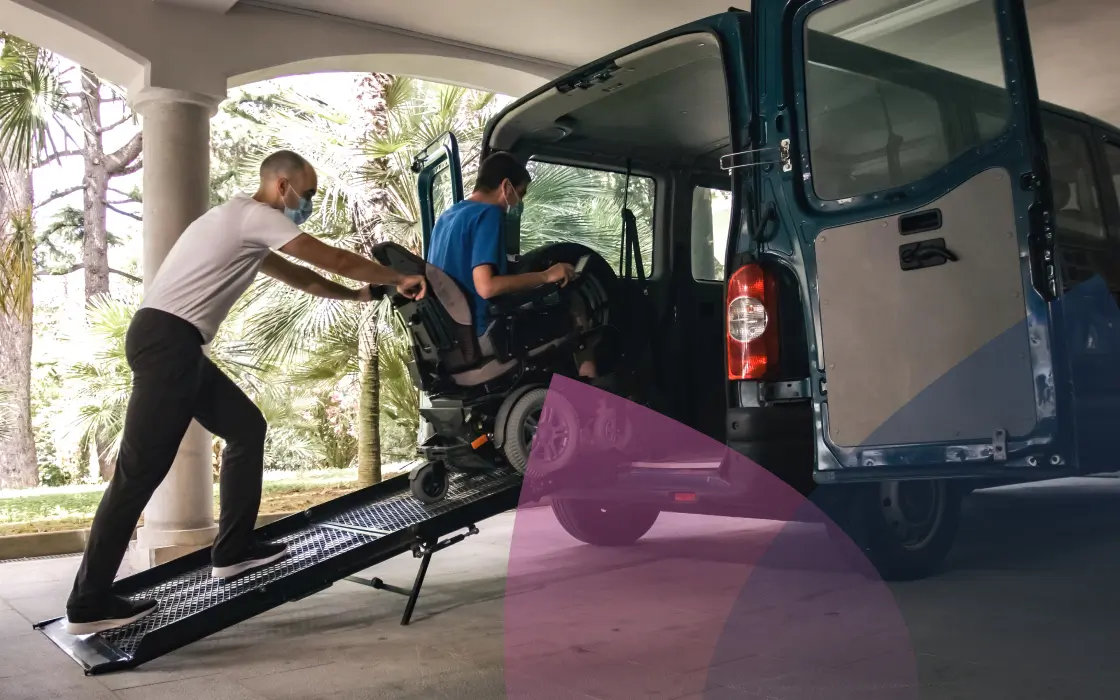
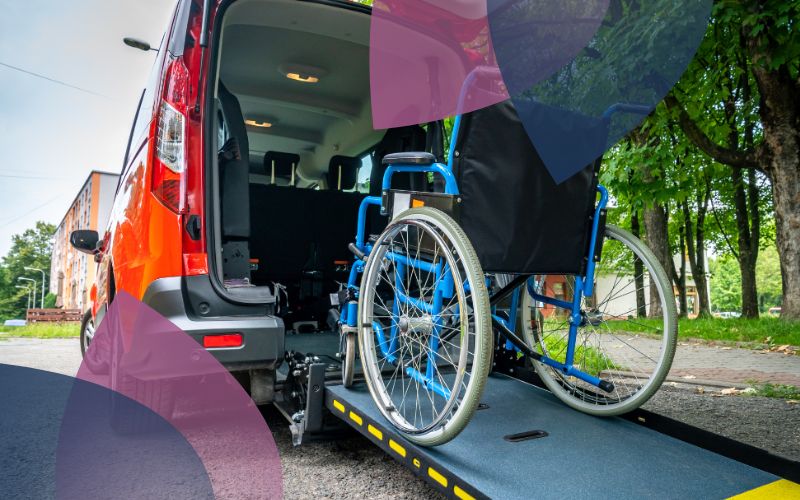
Some NDIS participants need a little extra assistance when it comes to transportation and community access in general. As an NDIS support worker, if you provide transport assistance, you may be able to claim travel costs.
Here’s how provider travel costs work.
The NDIS travel allowance is a type of funding provided under the National Disability Insurance Scheme (NDIS) to cover transportation-related costs for both participants and service providers. This allowance is designed to ensure that participants can access necessary supports and services while enjoying social and community participation without facing undue financial barriers related to travel.
There are two main types of travel allowances to be aware of:
Ultimately, the travel allowance plays a key role in ensuring both NDIS participants and providers can connect without accessibility or cost barriers affecting the quality of care or support. Download our guide on NDIS Travel Allowances for Support Workers and learn how to claim NDIS travel costs correctly.
When it comes to claiming the travel allowance, NDIS support workers can claim for travel costs and travel time.
Travel costs, also known as non-labour costs, refer to the expenses incurred during travel, including fuel, tolls, parking, running costs or kilometres driven in the worker’s own vehicle. It may also include public transport costs if applicable. Under the 2024–2025 NDIS Pricing Arrangements and Price Limits, support workers can claim:
Travel time refers to the amount of time a support worker spends travelling to a participant’s location to deliver a service. This includes time spent driving, on public transport or otherwise getting to the participant.
The NDIS uses the Modified Monash Model (MMM) to determine the maximum worker travel time that can be claimed. For MMM1-3 areas, support workers can claim up to 30 minutes travel time and up to 60 minutes travel time in MMM4-5 areas.
In instances when a support worker is travelling between multiple participants within a region, travel costs should be split between participants. That said, you’ll need to negotiate the specific travel costs with each participant ahead of time as part of the service agreement. Additionally, if you’re delivering core and capacity-building supports, you can claim worker travel time for the time spent travelling from your last participant back to your usual place of work.
Travel time should be charged at the same hourly rate as the relevant support item against the participant’s core budget. This rate should be agreed upon by the participant.
To claim travel costs as a support worker, the following conditions must be met:
Follow these steps to claim NDIS provider travel costs.
Before providing services to participants, ensure their NDIS plan has adequate funding to cover the agreed-upon travel expenses. Travel costs are typically included under “Core Supports” or “Capacity Building” funding.
Participants will fall into one of three transport support levels:
There may be exceptional circumstances when some participants have a higher transport budget to allow them to get to and from work.
Take the time to ensure the participant agrees to the transport costs ahead of time. These costs must be clearly outlined in the service agreement, including travel time and any other associated costs such as kilometres driven, road tolls or parking fees.
It’s essential to keep a detailed log of the time spent travelling to the participant’s location. Not only do records help to maintain accuracy, but they’re also essential if you need to provide documentation for an audit. Your log should include:
It can be a good idea to use a travel management app, like CareMaster, to track distance and other travel-related expenses.
Add up the total time spent travelling to the participant. If you’re in a metropolitan area or regional centre (MMM1-3), the maximum claimable travel time is 30 minutes. In regional areas (MMM4-5), it’s 60 minutes.
Calculate the total kilometres driven multiplied by the NDIS-approved rate per kilometre. For example, if you drove 10 kilometres at the NDIS-approved rate of $0.99/km, it would work out as $9.90. Don’t forget to add any additional costs like tolls or parking fees.
If you also provided support to your participant, you’ll need to calculate your support costs based on your agreed hourly rate.
Depending on the transport supports you provided, your invoice could include up to three separate costs for the support item, labour charge and non-labour costs.
Most NDIS service providers have a system for submitting claims, such as the NDIS myplace Provider Portal.
To input your travel time and costs into the portal, you’ll also need:
Be sure to double-check that the information is correct before submitting your claim. Find out more about how to claim NDIS travel costs with our complete step by step guide.
CareMaster’s NDIS Software provides comprehensive vehicle management capabilities, so you can easily track your fleet and manage travel allowances. Book a free demonstration to see how CareMaster can help to streamline your business.



CareMaster would like to acknowledge the Traditional Custodians of the land on which we operate, and pay our respects to their Elders past and present.